Pages

Tuesday, May 21, 2019

Welcome to Basic English 1!

Hello, everyone, and welcome to the instructor’s blog for Basic English 1! This blog gives you important information about the course, so please write down the address now, and check the blog every week! As you can see in your address bar, the address is:

basicenglish3.wordpress.com

Just type the address into the address bar (not the search field!) of your browser. Add a bookmark to your browser, and write down the address in your notebook.


The course has two main goals:

  1. To get accustomed to reading English books daily, in order to build basic knowledge of English and increase reading speed. This will prepare you for the Extensive Reading and Listening courses.
  2. To get accustomed to writing in English regularly on your blog, to build confidence and fluency and to raise your grammatical awareness. This will prepare you for Writing courses and for Extensive Reading and Listening courses.

It also has a secondary goal:

  • Learn how to use computers in your English study.

Simply stated, in order to pass the course with a good grade, you need to:

  1. Read 100 English books;
  2. Keep a record in the 読書記録手帳 of all of those books;
  3. Write reviews on your blog of 35 of those books.

There are about 100 days in the semester. So you basically need to read one book every day.

You can find thousands of suitable books in the University Library on the 3rd floor, in 洋書 section 428. Please look for that section today!

Saturday, March 9, 2019

Basics of Qualitative Research Design Berg Ch. 2

Before engaging in a qualitative research project, check out this slideshow:


Basics of Qualitative Research Design Berg Ch. 2 Leedy and Ormrod Ch ppt download: Qualitative methodology Data in words rather than numbers Non-positivistic orientation Includes:  Field research and ethnography  Observation, case studies  Qualitative interviewing  Action research  Historical comparative analysis

Tuesday, September 11, 2018

AWL Sublist 1 sentences

an analysis of 210 journals’ language guidelines was a good start for a study such as this
このような研究では、210の学術雑誌の言語ガイドラインの分析は良い始め方であった。

these were the source of so many of the rigid guidelines identified in the study.
これらは、本研究で見つかった硬いガイドラインの発行者であった。

the recent developments in emerging fields of written ELF and ERPP in global contexts indicate there is academic support for change
世界規模の ELF と ERPP の分野においての最近の発展から、学界では改革を支持する者がいると言える。

Some academic publications are responding to the variations of language being produced by writers from around the globe
ある学術出版物が世界各国の著者が書く英語の様々な種類に対応しようとしている。

Authors who feel their English language manuscript may require editing to eliminate possible grammatical or spelling errors may wish to use the English Language Editing service available from Elsevier’s WebShop.


Monday, September 10, 2018

Tornado Alley

The clouds get darker and darker. In two or three places, you see tornado funnels starting to come down. If they come down near you, you'll be in big trouble.
"This is not good," you say to yourself.

I am in great trouble. Will I escape from the tornado? As you can see, this is an adventure story. Like the other books in the Atama-ii Books series, it is an interactive story: I need to make choices at most steps in the story. This was actually my third time to read the story, and this time I has a good result: I didn't die in the tornado, and I managed to get a good story and sell it for lots of money. Would you dare to go to Tornado Alley and stay out when a storm comes?

Of course, living in Kumamoto, I'm used to typhoons. But it is not so usual for really bad weather to hit Kumamoto city, and I have never been in great danger. I wonder what it would be like to actually see a tornado?

Ito, L. (2015). Tornado Alley. Florida and Tokyo: Atama-ii Books.

Hello, everyone

Hello, everyone, nice to meet you. My name is Rick L., and I'm happy to be teaching this course. I'm from the UK, and I'm a professor in the Department of English Language & Literature at the Prefectural University of Kumamoto. I live in Kumamoto City with my wife and one daughter (the other daughter is away at university).
My field is applied linguistics, and I'm especially interested in sociocultural theory, writing, and computer-assisted language learning.
In my free time, I like reading novels, watching movies, and playing table tennis.
I'm looking forward to working with you over these three days.

Thursday, June 14, 2018

A couple of good books for writing your sotsuron (graphs, charts, figures)

One important part of writing a graduation paper (sotsuron) for many students is creating charts or figures. This can be a difficult thing to do well. So in this post I'm going to tell you about a couple of books that might be useful. (Also, please check out my Booklog shelf for items tagged visualization.)

The first one is called Effective Data Visualization. This book takes you through the basic principles of displaying your data so that readers can understand it.
著者 : Evergreen
SAGE Publications, Inc
発売日 : 2016-05-04
PUKLIB: 洋書(3F)302.2 E 89

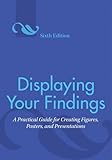
The second one, Displaying Your Findings, teaches you how to format your graphs or figures in the style approved by the American Psychological Association.

I hope that you will one or both of these books interesting.
PUKLIB: 3F (洋書) 150 N 71

Saturday, March 17, 2018